Cork City Council has shared the latest on the new Glanmire to City Cycle Route

The project will include new children’s play facilities.
Cork City Council has unveiled details of the next phase of the Glanmire to City Cycle Route, with Phase Two set to provide 4.9 kilometres of new and improved pedestrian and cycle facilities from Tivoli/Dunkettle to Michael Collins Bridge in the city centre.
The scheme will link to the Glanmire to City Cycle Route Phase One (currently under construction) and the Carrigtwohill to Dunkettle Greenway, which has been completed.

A statement from the Council confirmed that the proposed public realm enhancements as part of the scheme will deliver high-quality recreational space as well as “improved urban biodiversity and playful elements for younger users”.
Key features include:
- 4.9 kilometres of safe shared and segregated two-way pedestrian and cycle paths from Michael Collins Bridge in the city to Dunkettle.
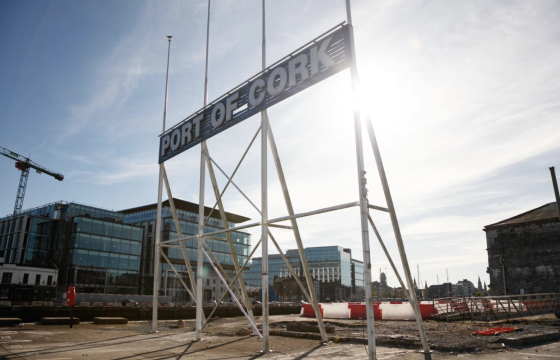
- Separation of pedestrian and cycle facilities from a busy roadway via a route through private lands off Water Street, Port of Cork Gardens (Lower Glanmire Road) and Tivoli Estate.
- Two new pedestrian and cycle bridges (over dry-dock off Water Street to allow continuity of cycle track and footpath by avoiding pinch point of Water Street / Lower Glanmire Road junction, and over the railway line at Dunkettle, linking onto Glanmire to City Cycle Route Phase 1 and the Carrigtwohill to Dunkettle Greenway.
- Enhanced public lighting along the route
- Improved public realm and recreational space, including play facilities.
Gerry O’Beirne, Director of Infrastructure Development at Cork City Council, said that the proposals, which now go out to formal public consultation under the Part 8 Planning process, were essential for the improvement of sustainable transport in the city, and supporting sustainable growth.
“The National Planning Framework 2040 envisages that Cork will become the fastest growing city region in Ireland with a projected 50% to 60% increase in its population up to 2040,” he added.
“This growth is very positive but it means that new sustainable transport options must be provided in Cork. There is limited capacity for increased motor traffic on our roads and if the city is to function well and prosper, we need to deliver and promote sustainable modes of transport,” he said.