Cork is about to host Ireland’s largest EVER dinosaur and fossil exhibition
This will be mesmerising.
A collection of eight-metre-long skeletons of the only dinosaurs known to have existed on the island of Ireland are set to go on display to the public for the very first time, in a spectacular new exhibition of Irish fossils.
The Domain of the Dinosaurs will run in University College Cork’s Glucksman Gallery from Sunday, November 16th until April 12th, 2026, and will feature over 250 real fossil specimens from land, sea and air, bringing the world of the Irish dinosaurs to life.
The exhibition is the largest dinosaur exhibition ever in Ireland, with over 250 real fossils and over five tonnes of material.
It will take a team of twelve people a week to assemble, with specialists flying in from three countries to build the dinosaur skeletons.
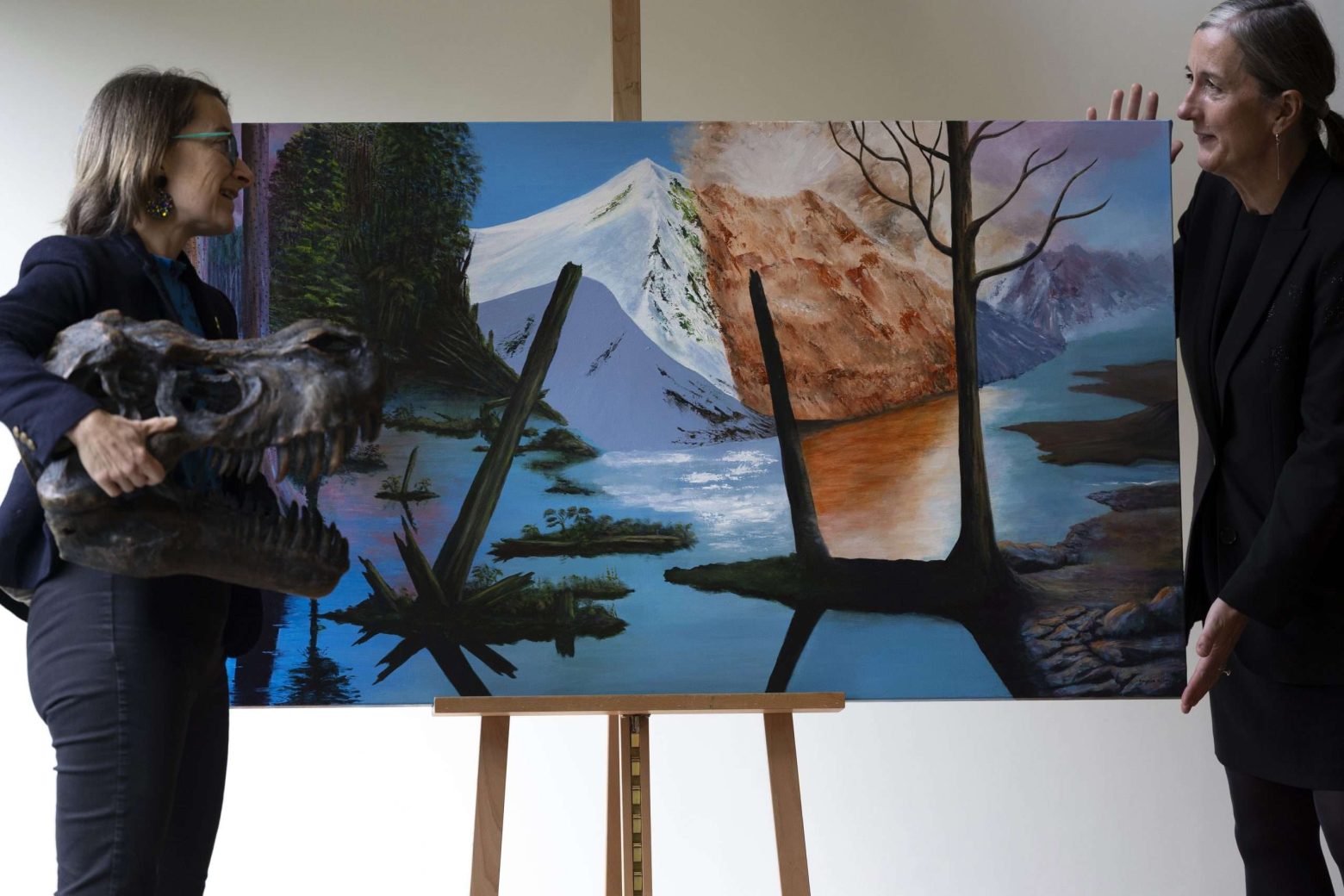
Professor Maria McNamara, Professor of Palaeontology at UCC speaking with Professor Fiona Kearney, founding Director of the Glucksman Gallery. Photograph: Clare Keogh
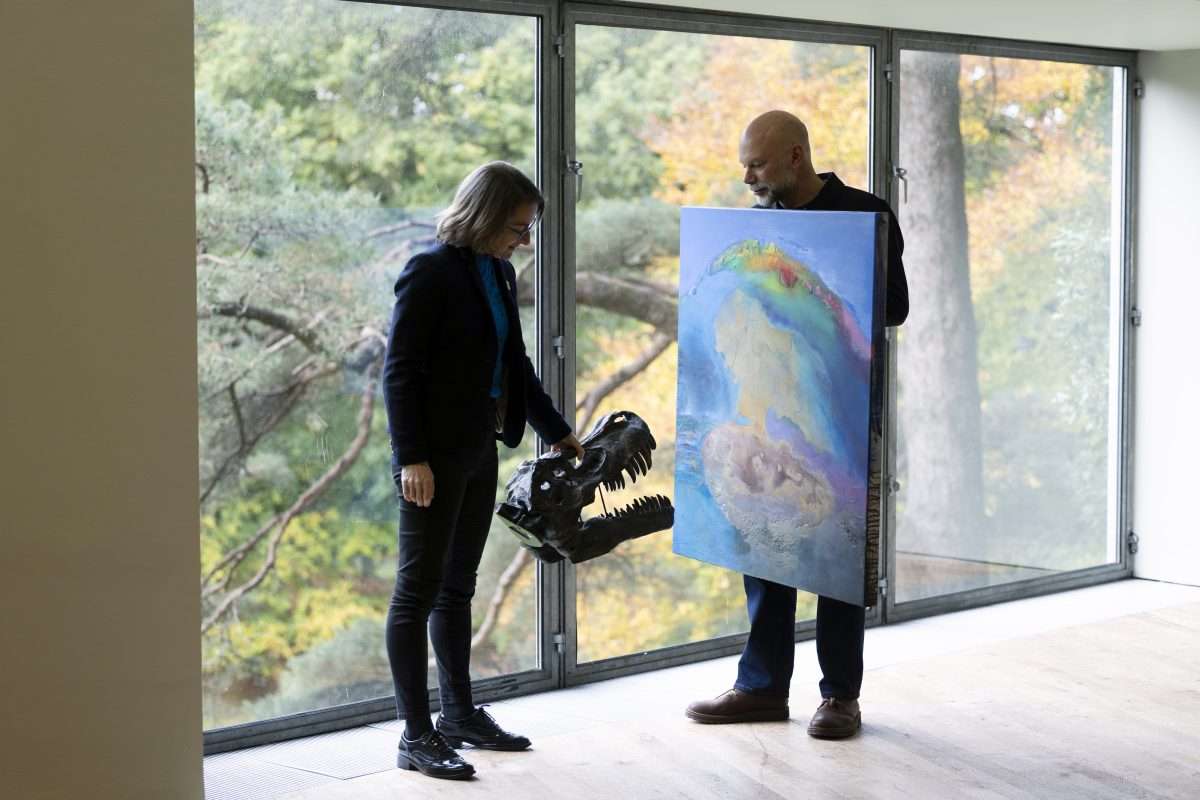
The skeletons will be complemented by a series of older, pre-dinosaur Irish fossils paired with new artworks by Irish artists to give these ancient specimens a very human connection with the modern world.
Go back in time
The centrepiece of the exhibition will be skeleton casts of Megalosaurus and Scelidosaurus, bones from which were discovered in the 1980s by the late Roger Byrne, a schoolteacher and fossil collector, on a beach in Co. Antrim.
“This remarkable exhibition is a celebration of life in Ireland as it was during the time of the dinosaurs.” said Prof. Maria McNamara, Professor of Palaeontology at UCC.
“That ancient Ireland would be unrecognisable to us today – ecosystems on land and in the ocean were dominated by reptiles, with many unfamiliar plants and animals.
“Visitors to the exhibition can see the real fossil evidence of those extinct creatures, including fossil footprints, trees, insects, giant flying reptiles called pterosaurs, and lots of marine animals including giant predators such as the ichthyosaurs and plesiosaurs. There’s even fossilized dinosaur eggs and poo!”
Members of the public can visit the exhibition between 11am and 5pm from Tuesday– Saturday from Sunday, November 16th. General admission is free; guided tours will have priority access.